Showing posts with label photography. Show all posts

Wednesday, April 30, 2014

Happy journeys

The air from the fan above my head is hot. Evening does not seem to make any difference to the weather. Yet when I look back to my travels of the last twenty days through plains and mountains,  an air of contentment passes through.  Travels through Neora, Lava, Maane Bajang, Garibas, Singalila, Darjeeling, Jaldapara will always linger on....

Thursday, May 16, 2013

MANIPUR MERRY - A CULTURAL TOUR TO MANIPUR (28TH FEB 2014 TO 6TH MARCH 2014)


Manipur,fondly called by Pandit Jawaharlal Nehru as the "Jewel of India"is a mosaic of ancient traditions, rich cultural patterns and pristine natural landscapes.Sharing an international border with Burma(Myanmar), Manipur is intertwined with the cascading rapids, tipping rivers, carpets of flowers, deep valleys and myriad lakes.The people of Manipur include Meiteies, Nagas, Meitei Pangals, Kukis and many other colorful communities which have co-existed in complete harmony over the centuries. These are people whose spiritualism, folklore, myths and legends, dance forms, indigenous games and martial arts, cuisines, exotic handlooms and handicrafts are invested with mystique of nature and have made this land unique.


IT Nature Club is pleased to announce its cultural tour to this beautiful state Manipur during the month of February 2014.

ITINERARY:

Day1(28th Feb'14) :Arrive at Imphal and transfer to Hotel. Afternoon visit Kangla / State Museum / Polo ground / Govindajee Temple.Overnight at Imphal.

Day 2(1st March'14) :Drive to Ukhrul to explore the beautiful landscape.Overnight at Home stay.

Day 3(2nd March'14) :Drive back to Imphal. After lunch Drive to Mutua museum / Pangong Eco Garden / Zoological Garden / Singda.Overnight at Imphal.

Day 4(3rd March'14) :After breakfast drive to Moreh. Cross into Burma. Visit Thoibi Lake / Buddha Monastery / Tamu Market / Water World Restaurant / Namphanglong. Return to Imphal and overnight at Imphal.

Day 5(4th March'14) :After breakfast visit to IMA Market, ISKCON Temple / Chiru Waterfall / Japanese War Memorial / Loikoipat and proceed to Loktak Lake with a stop at Moirang to visit INA memorial. Overnight at Home stay or camping near Loktak lake.

Day 6(5th March'14) :After breakfast.Explore Keibul Lamjao national park. Birding, boating, village and cultural experience.Overnight at Home stay or camping near Loktak lake or return back to Imphal.

Day 7(6th March'14) :Drive back to Imphal. Wash and change at Hotel. Transfer to Airport for back home.

Places covered during the tour:

Govindajee temple:A historic Vaishnavite centre, adjoining the Royal Palace of Manipur, this temple is the symbol of the spiritual identity of the people of Manipur. Twin domes, a paved courtyard, and a large raised congregation hall form a perfect backdrop for the priests who descend the steps to accept offerings from the devotees. The shrines of lord Krishna and Balaram and Jagannath flank the two sides of the presiding deity. Early hour prayer is must foe devoted followers exuding spiritual fervor and ecstacy.

Kangla:The seat of Manipur’s power until 1891, the historical embodiment of Manipuri rulers and the people of Manipur, Kangla has a special place in the hearts and minds of the people of Manipur. The old Govindajee temple, outer and inner moat and other relics are prefect reflections of the rich art and architectural heritage of Manipur.

Mutua Museum:The museum is a cultural complex located at Andro village, about 26 kms from Imphal. Here artifacts of the state and North Eastern region such as pottery, rare coins, rare manuscripts, paintings, basketries, bell metals, jewlleries, wood carvings etc. are housed. There are exact replicas of the traditional houses of various indigenous communities namely Poumai, Kabui, Meitei, Kuki and Tangkhul.

State Museum:This interesting museum near the Polo ground has a fairly rich collection and display of Manipur’s tribal heritage. Particularly interesting are the costumes, arms & ammunition relics and historical documents on display.

Loktak Lake & Keibul Lamjhao National Park:Located 48 kms from Imphal, Loktak is the largest fresh water lake in India’s North East. Floating biomasses, locally known as ‘phumdi’ is a unique feature of this lake which feeds the wide array of flora and fauna and also the local fishermen.Keibul Lamjhao, a protected area in this lake ecosystem is the only floating national park in the world. This is the last surviving natural habits of the Sangai or the dancing deer(Brow Antlered Deer) of Manipur. Other wildlife to be seen include Hod Deer, Otter, a host of water fowls and migratory ducks.

Ukhrul:Ukhrul, the highest hill station of the state is located at a distance of 83 kms to the East of Imphal.This is home of a colorful warrior tribe, the Tangkhul Nagas. Shirui Hills and Khangkhui limestone caves are interesting places to visit.

Tour cost : Rs.28,000 /- per person on twin sharing basis for Indian Passport Holders


Cost Includes:

  • 3 nights hotel stay in Imphal on twin share including breakfast in Non AC rooms 
  • 1 night at Home stay on twin share on full board in Ukhrul 
  • 2 nights at Home stay or camping in Loktak Lake village on full board 
  • All transfers and excursions by a Bolero or Scorpio 
  • Local English speaking guide 
  • Boating in Loktak lake 
  • All entrance fees 

Cost Excludes: 

  • Flights to and from Imphal 
  • Lunch and dinner in Imphal 
  • Any Kind of Personal Expenses or Optional Tours. 
  • Any Kind of Drinks (Alcoholic, Mineral, Aerated) 
  • Camera/Video fees 
  • Tips 
  • Any thing not specifically mentioned under the head “Cost includes” 

For booking the tour, call us on +91 9845383882 or mail us titnatureclub@gmail.com or info@itnatureclub.in​

Monday, December 3, 2012

Birding in the land of Thunder Dragon - Bhutan ( Day 1 )

Perched high on the mighty Himalayan range, the Kingdom of Bhutan has defied globalization and chosen to remain a hidden paradise, now slowly opening up to the world! I was thrilled to go back again, this time for bird watching.
Our journey began here


The busy border gate at Pheuntsholing

Common Myna enjoying the shade around a busy street


This white pigeon seem to be saying " me too here "


School children and govt servants strictly follow to the Code of National Dress. Savitha met these students and they happily posed for us 


Street dogs and cats are a huge problem in Bhutan..This NGO seem to be doing some good work


Most of the workers around here are from Coochbehar . This very pleasant, warm and freindly lady has been working in the same hotel where we stayed for nearly 20 yrs now...Hard to get such employees these days


Our one night stay in Pheuntsholing..a no frills , fairly comfortable hotel ..we paid Rs.800/- for a four bedded room..:-) Not a bad deal...


We booked this Wagon-R to take us to Paro for the next day..


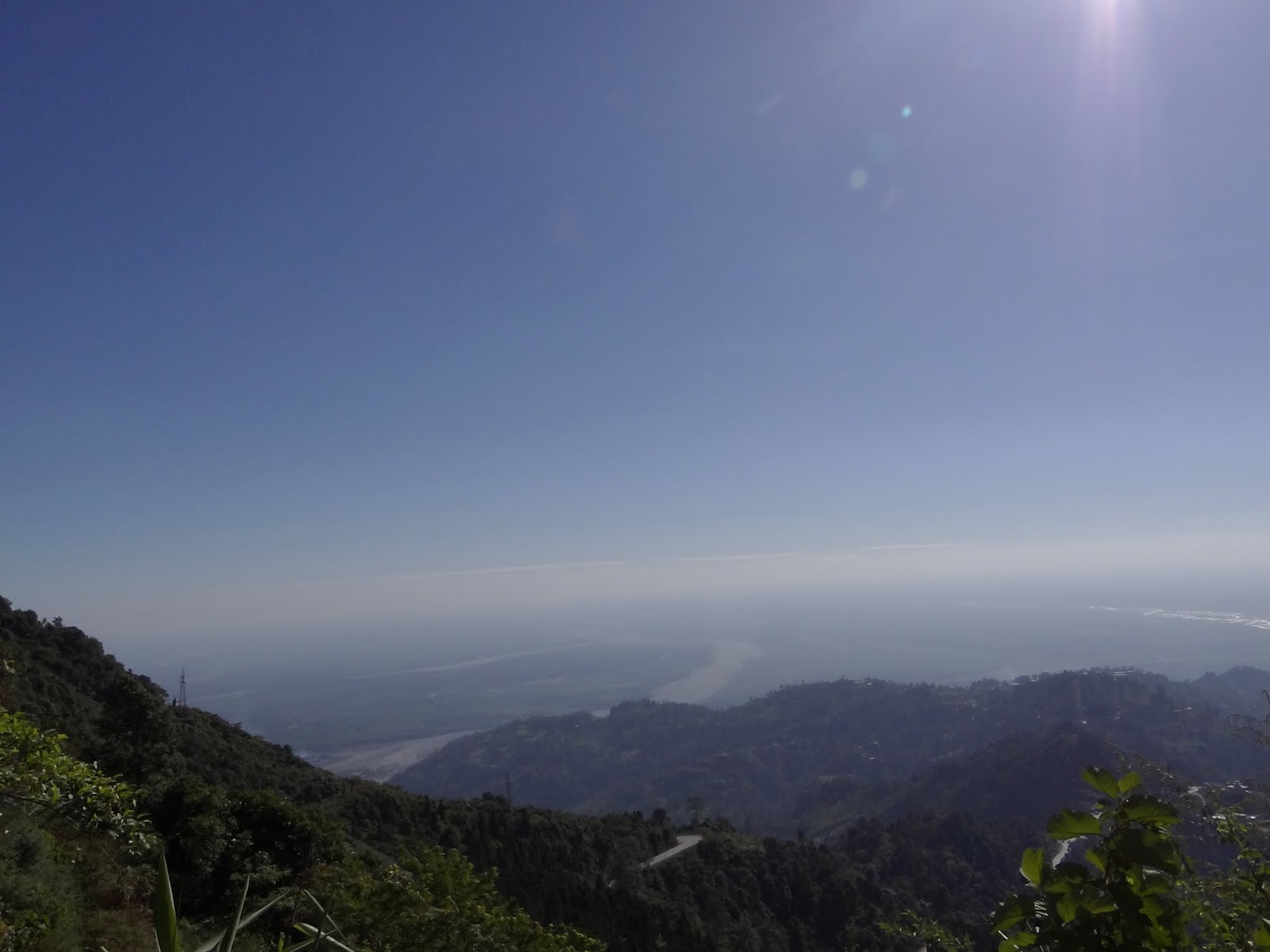
Passed through amazing scenery

Landscape was awesome


That was the interior of the taxi with the driver, who was affectionately called as "Psycho" by other taxi drivers for the idiotic mistakes he makes

We saw this raptor in the distance..


Sun seems to be spraying light here

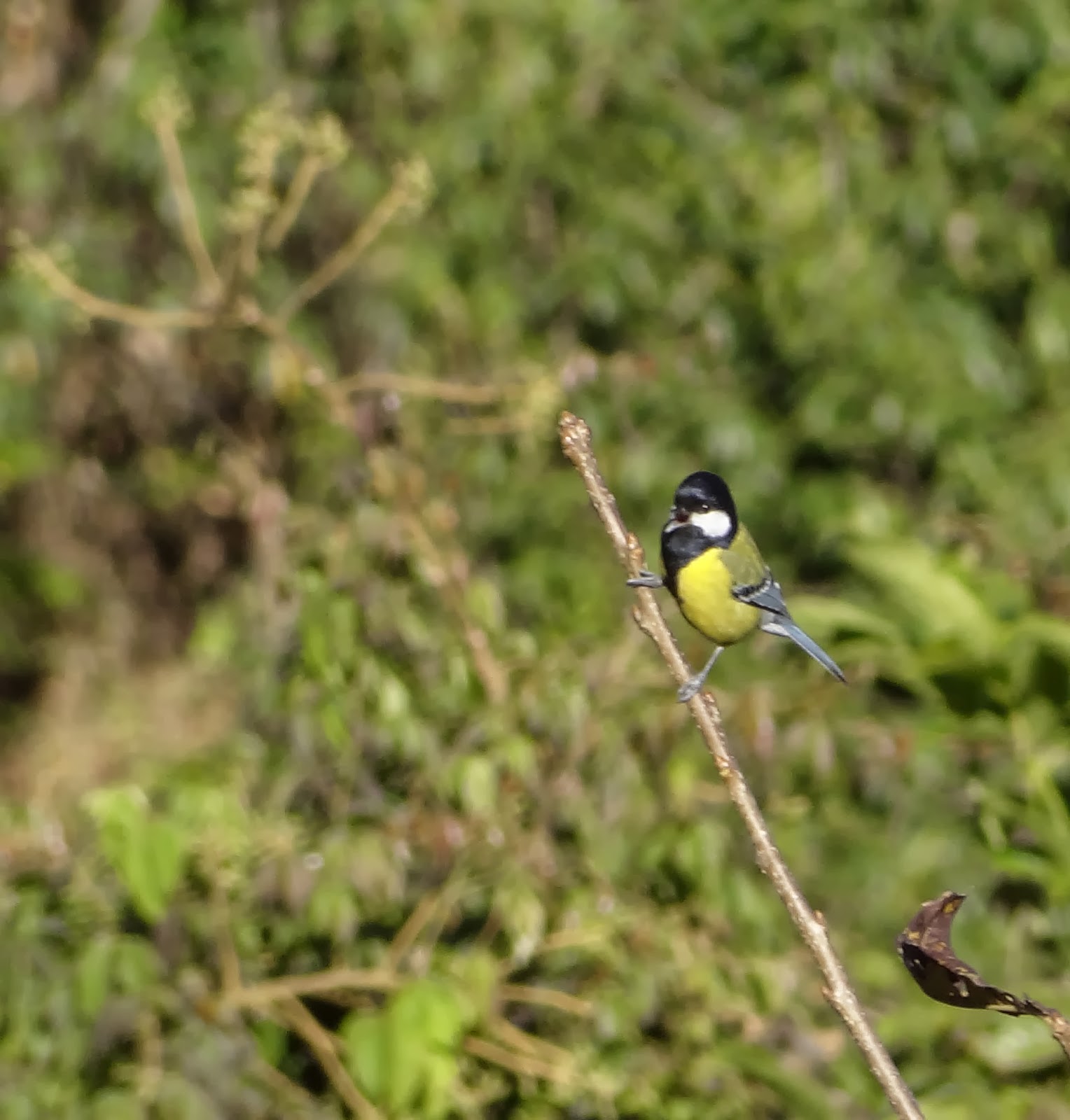
Along the way Green-backed Tit showed us few acrobatics

Rufous Sibia was on a balancing act

After an adventurous detour thanks to Psycho who drove us to Thimpu inspite of asking him repeatedly how far is Paro . Had to shell out another Rs.600 for hiring one more taxi to drive us to Paro. I was happy to see the beautifully lit Dzong and the museum again as we approached the town of Paro

A bit closer look


It was a long day drive and the next day too was to be a busy one..we checked into my fav. hotel in Paro, Hotel Jigmeling and snored away the night 

Monday, May 10, 2010

Neora Valley - A travelogue by Usha Shetty


Have you ever taken one of those holidays where you were content with spending your entire stay on the balcony? Stepping into this one, I was tempted to do just that, as I told my friend Geetanjali, a travel consultant. Every holiday should, in fact must provide, if not a balcony with a view, then at least a room with a view! Happily Neora Valley Jungle Camp does more than that! 

Perched at 6000 ft on the edge of the Neora Valley National Park in the Kalimpong sub-division of West Bengal’s Darjeeling District, it is close to the state’s borders with Sikkim and Nepal. Built in 2007 in an abandoned grazing pasture overlooking tiny Kolakham, the last village near the border, it gives you a feel of what the word remote means. Lava, the nearest town is 8 km away. While that is not at all very far for us arrogant plainspeople, we are humbled by the bumpy half-hour ride in the narrow jungle paths cutting through the dense hillside. Quite a ride by day, it is not something I would even like to attempt at night! 

The nights are meant for sitting in the balcony and soaking in the silence of the hills. A silence broken occasionally by the sounds of crickets or cicadas. The thick darkness is pierced by the twinkle of lights from the village down below, from other villages on the surrounding hills and in the far distance, the lights of Gangtok, 40 km away. The days are also meant for sitting in the balcony, this time, to soak in the beauty of the hills, rolling one after another into the distance. And to rest one’s gaze upon the majestic sight of Mount Kanchenjunga and the other snow peaks crowning the horizon. Vying closely with the world’s third highest peak for your attention are clouds of various hues, which, depending on their will, could be floating around at your level or parked on some lesser peak down below. All you need to do is gaze and laze. 

For the less lazily inclined, there are forays to be made into Kolakham village and loads of bird watching to be done, as the birding- pro Geetanjali would swear. She did that while I did the former, with both my descent and ascent on the hill being pleasant but clumsy, displaying neither the nimble-footed grace nor the stamina of the hill people or even of their cattle, as they make their way up and down all the time with perfect ease. 

The Neora Valley national Park is good for trekking in winter, with its highest point standing at 10,600 ft (when we were there, it rained often, so no such luck! We were told to come back in winter when it sometimes snows). This virgin forest, stretching across a seemingly small patch of 88 sq km, has one of the most exceptional eco-systems in the entire northeast, harbouring temperate, sub-temperate, tropical and sub-tropical species. Not many places can boast of junipers, rhododendrons, oaks, bamboo, orchids, ferns and banana plants all growing in the same patch of soil! And with large tracts of the park still inaccessible and unexplored! Home to the elusive and shy Red Panda, the forest also shelters musk deer, clouded leopard, porcupine (known locally as dumshi), marten (of the mongoose family), jungle hares, dholes and sometimes, black bears. 

It is in fact, the objective of preserving the endangered Red Panda’s natural habitat, the bamboo groves, by creating a community forest reserve, that has spurred the Kolkata-based Help Tourism to start Neora Valley Jungle Camp. Combining tourism with conservation and sustainable development, as they do in all their properties in the northeast, they ensure that all the staff at the camp are locally hired and trained to professional standards.

The professionalism certainly shows in the simple, tasteful ambience, the comfortably cozy accommodation, the hospitality, and most certainly, in the food. Over 4 days, we were treated to a variety of Indian, Nepali and Chinese food that all of us, kids and adults, delighted in. For example, the Tibetan bread ‘Fale’ – fermented dough fried and served with dum aloo. But the taste that lingers the most is that of the spicy green chutney I was served with a simple boiled potato and rice when I was recovering from my illness - it tasted simply heavenly! Illness? Yes, in those 4 days I even had time to suffer from a lousy tummy upset, rendering my holiday a truly ‘restful’ one! 

The sickness or the rest, however, did not impede a visit to Kalimpong, a place that still retains some of the charm of a colonial hill town. Kalimpong, 32 km away, is incidentally fed by the Neora River. Clusters of large, drooping, yellow, bell-shaped flowers, plump roses and plumper hens as well as pretty, well turned-out girls seemed to be everywhere. The last would explain the profusion of beauty parlours all around! The bustling market roads, excellent schools, the army base and golf course characterize the town further. Deolo Hill (a viewing point), the Buddhist Zang Dhok Palri Phodang Monastery on Durpin Hill and a cactus nursery, populated by species from North & South America, were all seen in quick succession, in deference to my state of ailment. 

The drive to Kalimpong involved a stopover at the Kagyu Thekchen Ling Monastery and Retreat Centre in Lava. Established in 1990 and picturesquely situated, it is also known as Ratnarishi Bihar Buddhist Gumpha. Wherever you go in Lava, it would be hard to miss the Gorkhaland signboards outside practically every shop and restaurant, a sign of the friction that underlies the serenity of the place. It is a reminder of the many conflicts over its possession that this land has witnessed over the last 200 years - between the Chogyal of Sikkim, the Lepcha tribes, the Bhutanese kingdom, the British, the Gorkhas of Nepal who gradually populated the place, and now the govt. of West Bengal. This discord is encountered here in signboard references to geographical location and, down below in Kolakham village, when the Nepali community (Rais, in this case) talks about being treated as outsiders by other locals (tribals & Bengalis) even after being settled here for generations. The Gorkhas being numerically strong, have gained political and economic dominance of the region and are a significant force to reckon with, whether through the Gorkha National Liberation Front or the Gorkha Janmukti Morcha. But what of the Lepchas, the indigenous tribes of Sikkim and the Darjeeling region? These simple people believe that they did not migrate here from anywhere like the Gorkhas or the Limbus and Bhutias but belong here. There are references to a Lepcha king having sent forces to Chandragupta Maurya to aid his fight against Greek invaders. This primeval race call themselves `Mu-Tanchi-Rong Kup` or `the mother's loved ones’. Unfortunately, the upheavals of the last 2 centuries have made them a minority in their own land. They are now finding a voice, asking for formation of a Lepcha Development Council, for recognition of their language and for political representation. In Gorubathan, where the last Lepcha king, Gaeboo Aachyok fought the Bhutanese from Dalim Fort, there are plans to preserve the ruins of the fort and open a museum of Lepcha artefacts, besides promoting its ancient monasteries and bio-organic tea gardens. 

As I admire the thickly forested hills around Changey Falls, a Lepcha area and a short drive from the Jungle Camp, I fervently hope that, in the years to come, the Lepchas’ beautiful land is not lost to them and that they are not lost to the world either. 

It is in this mood that we part with this beautiful land and return to Kolkata for more exploration....